Pengaruh Fraksi Berat Partikel Serat Mesokarp Kelapa Sawit terhadap Kekuatan Tarik dan Lentur Komposit LDPE

DOI:
https://doi.org/10.32528/jp.v11i1.5012Keywords:
LDPE; serat mesokarp kelapa sawit; fraksi berat; kekuatan mekanikAbstract
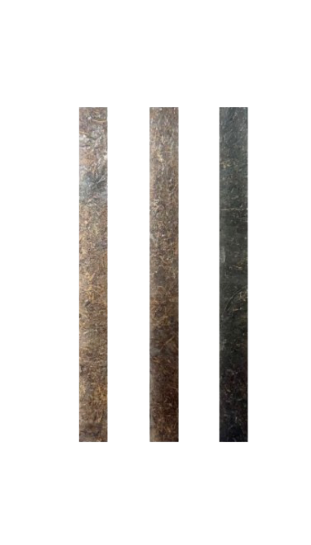
Serat mesokarp kelapa sawit merupakan residu industri yang berpotensi dimanfaatkan sebagai pengisi komposit termoplastik. Penelitian ini menganalisis pengaruh fraksi berat partikel serat mesokarp terhadap kekuatan tarik dan lentur komposit low-density polyethylene (LDPE). Partikel yang lolos ayakan 200 mesh ditambahkan sebesar 0, 5, 10, dan 15 wt%. Campuran dipanaskan pada 150 °C selama 20 menit, diaduk manual setiap 5 menit, kemudian dipres selama 5 menit hingga mendingin. Tiga spesimen dari satu lempeng untuk setiap komposisi diuji tarik dan lentur. Nilai tarik tertinggi pada rentang pengujian diperoleh pada 5 wt%, yaitu 16,16 ± 1,14 MPa, sedangkan nilai lentur tertinggi diperoleh pada 15 wt%, yaitu 55,72 ± 5,50 MPa. Perbedaan respons kedua pengujian menunjukkan bahwa fraksi pengisi dan mutu pembentukan lempeng memengaruhi setiap mode pembebanan secara berbeda. Hasil ini memberikan data awal untuk pengembangan komponen LDPE non struktural dan peningkatan nilai guna residu kelapa sawit.
References
[1] Asyraf MRM, Ishak MR, Syamsir A, Nurazzi NM, Sabaruddin FA, Shazleen SS, et al. Mechanical properties of oil palm fibre-reinforced polymer composites: A review. J Mater Res Technol 2022;17:33–65. https://doi.org/10.1016/j.jmrt.2021.12.122.
[2] Pickering KL, Efendy MGA, Le TM. A review of recent developments in natural fibre composites and their mechanical performance. Compos Part A Appl Sci Manuf 2016;83:98–112. https://doi.org/10.1016/j.compositesa.2015.08.038.
[3] Mohanty AK, Misra M, Hinrichsen G. Biofibres, biodegradable polymers and biocomposites: An overview. Macromol Mater Eng 2000;276:1–24. https://doi.org/10.1002/(SICI)1439-2054(20000301)276:1<1::AID-MAME1>3.0.CO;2-W.
[4] Kamarudin SH, Mohd Basri MS, Rayung M, Abu F, Ahmad S, Norizan MN, et al. A Review on Natural Fiber Reinforced Polymer Composites (NFRPC) for Sustainable Industrial Applications. Polymers (Basel) 2022;14:3698. https://doi.org/10.3390/polym14173698.
[5] Shinoj S, Visvanathan R, Panigrahi S, Kochubabu M. Oil palm fiber (OPF) and its composites: A review. Ind Crops Prod 2011;33:7–22. https://doi.org/10.1016/j.indcrop.2010.09.009.
[6] Nugraha AD, Nuryanta MI, Sean L, Budiman K, Kusni M, Muflikhun MA. Recent Progress on Natural Fibers Mixed with CFRP and GFRP: Properties, Characteristics, and Failure Behaviour. Polymers (Basel) 2022;14:5138. https://doi.org/10.3390/polym14235138.
[7] Faruk O, Bledzki AK, Fink HP, Sain M. Biocomposites reinforced with natural fibers: 2000–2010. Prog Polym Sci 2012;37:1552–96. https://doi.org/10.1016/j.progpolymsci.2012.04.003.
[8] Dittenber DB, GangaRao HVS. Critical review of recent publications on use of natural composites in infrastructure. Compos Part A Appl Sci Manuf 2012;43:1419–29. https://doi.org/10.1016/j.compositesa.2011.11.019.
[9] Ku H, Wang H, Pattarachaiyakoop N, Trada M. A review on the tensile properties of natural fiber reinforced polymer composites. Compos Part B Eng 2011;42:856–73. https://doi.org/10.1016/j.compositesb.2011.01.010.
[10] Jawaid M, Abdul Khalil HPS. Cellulosic/synthetic fibre reinforced polymer hybrid composites: A review. Carbohydr Polym 2011;86:1–18. https://doi.org/10.1016/j.carbpol.2011.04.043.
[11] Bledzki AK, Gassan J. Composites reinforced with cellulose based fibres. Prog Polym Sci 1999;24:221–74. https://doi.org/10.1016/S0079-6700(98)00018-5.
[12] Sreekala MS, Kumaran MG, Thomas S. Oil palm fibers: Morphology, chemical composition, surface modification, and mechanical properties. J Appl Polym Sci 1997;66:821–35. https://doi.org/10.1002/(SICI)1097-4628(19971031)66:5<821::AID-APP2>3.0.CO;2-X.
[13] Then YY, Ibrahim NA, Zainuddin N, Ariffin H, Wan Yunus WMZ. Oil Palm Mesocarp Fiber as New Lignocellulosic Material for Fabrication of Polymer/Fiber Biocomposites. Int J Polym Sci 2013;2013:797452. https://doi.org/10.1155/2013/797452.
[14] Salakhov II, Shaidullin NM, Chalykh AE, Matsko MA, Shapagin A V, Batyrshin AZ, et al. Low-Temperature Mechanical Properties of High-Density and Low-Density Polyethylene and Their Blends. Polymers (Basel) 2021;13:1821. https://doi.org/10.3390/polym13111821.
[15] Pham NTH. Characterization of Low-Density Polyethylene and LDPE-Based/Ethylene-Vinyl Acetate with Medium Content of Vinyl Acetate. Polymers (Basel) 2021;13:2352. https://doi.org/10.3390/polym13142352.
[16] Sreekala MS, Kumaran MG, Joseph S, Jacob M, Thomas S. Oil Palm Fibre Reinforced Phenol Formaldehyde Composites: Influence of Fibre Surface Modifications on the Mechanical Performance. Appl Compos Mater 2000;7:295–329. https://doi.org/10.1023/A:1026534006291.
[17] Kabir MM, Wang H, Lau KT, Cardona F. Chemical treatments on plant-based natural fibre reinforced polymer composites: An overview. Compos Part B Eng 2012;43:2883–92. https://doi.org/10.1016/j.compositesb.2012.04.053.
[18] Xie Y, Hill CAS, Xiao Z, Militz H, Mai C. Silane coupling agents used for natural fiber/polymer composites: A review. Compos Part A Appl Sci Manuf 2010;41:806–19. https://doi.org/10.1016/j.compositesa.2010.03.005.
[19] Li X, Tabil LG, Panigrahi S. Chemical Treatments of Natural Fiber for Use in Natural Fiber-Reinforced Composites: A Review. J Polym Environ 2007;15:25–33. https://doi.org/10.1007/s10924-006-0042-3.
[20] Abdelmouleh M, Boufi S, Belgacem MN, Dufresne A. Short natural-fibre reinforced polyethylene and natural rubber composites: Effect of silane coupling agents and fibres loading. Compos Sci Technol 2007;67:1627–39. https://doi.org/10.1016/j.compscitech.2006.07.003.
[21] Nuryanta MI, Widodo RD, Mujaki A, Rusiyanto, Kriswanto, Widayat W, et al. The effect of stacking sequence on the properties of hybrid agel/glass fiber reinforced polymer composite laminates. IOP Conf Ser Earth Environ Sci 2024;1381:12014. https://doi.org/10.1088/1755-1315/1381/1/012014.
[22] Olusunmade OF, Adetan DA, Ogunnigbo CO. A Study on the Mechanical Properties of Oil Palm Mesocarp Fibre-Reinforced Thermoplastic. J Compos 2016;2016:3137243. https://doi.org/10.1155/2016/3137243.
[23] Guedes JR, Florentino WM, Rodrigues LM, dos Santos C, Mulinari DR. Mechanical Properties of Natural Fibers Reinforced Polymer Composites: Palm/Low Density Polyethylene. Mater Sci Forum 2016;869:326–30. https://doi.org/10.4028/www.scientific.net/MSF.869.326.
[24] Miah MJ, Khan MA, Khan RA. Fabrication and Characterization of Jute Fiber Reinforced Low Density Polyethylene Based Composites: Effects of Chemical Treatment. J Sci Res 2011;3:249–59. https://doi.org/10.3329/jsr.v3i2.6763.
[25] Arrakhiz FZ, El Achaby M, Malha M, Bensalah MO, Fassi-Fehri O, Bouhfid R, et al. Mechanical and thermal properties of natural fibers reinforced polymer composites: Doum/low density polyethylene. Mater Des 2013;43:200–5. https://doi.org/10.1016/j.matdes.2012.06.056.
[26] Sdrobis A, Darie RN, Totolin M, Cazacu G, Vasile C. Low density polyethylene composites containing cellulose pulp fibers. Compos Part B Eng 2012;43:1873–80. https://doi.org/10.1016/j.compositesb.2012.01.064.
[27] Ferreira F V, Trindade GN, Lona LMF, Bernardes JS, Gouveia RF. LDPE-based composites reinforced with surface modified cellulose fibres: 3D morphological and morphometrical analyses to understand the improved mechanical performance. Eur Polym J 2019;117:105–13. https://doi.org/10.1016/j.eurpolymj.2019.05.005.
[28] Mubarak YA, Abdulsamad RT. Effects of microcrystalline cellulose on the mechanical properties of low-density polyethylene composites. J Thermoplast Compos Mater 2019. https://doi.org/10.1177/0892705717753056.
[29] Migneault S, Koubaa A, Erchiqui F, Chaala A, Englund K, Wolcott MP. Effects of processing method and fiber size on the structure and properties of wood-plastic composites. Compos Part A Appl Sci Manuf 2009;40:80–5. https://doi.org/10.1016/j.compositesa.2008.10.004.
[30] Bouafif H, Koubaa A, Perré P, Cloutier A. Effects of fiber characteristics on the physical and mechanical properties of wood plastic composites. Compos Part A Appl Sci Manuf 2009;40:1975–81. https://doi.org/10.1016/j.compositesa.2009.06.003.
[31] Sormunen P, Kärki T. Compression Molded Thermoplastic Composites Entirely Made of Recycled Materials. Sustainability 2019;11:631. https://doi.org/10.3390/su11030631.
[32] Valente M, Rossitti I, Sambucci M. Different Production Processes for Thermoplastic Composite Materials: Sustainability versus Mechanical Properties and Processes Parameter. Polymers (Basel) 2023;15:242. https://doi.org/10.3390/polym15010242.
[33] Song Y, al. et. A Novel CAE Method for Compression Molding Simulation of Carbon Fiber-Reinforced Thermoplastic Composite Sheet Materials. J Compos Sci 2018;2:33. https://doi.org/10.3390/jcs2020033.
[34] Holbery J, Houston D. Natural-fiber-reinforced polymer composites in automotive applications.
Downloads
Published
How to Cite
License
Copyright (c) 2026 Dimas Eka Firmansyah, Rahmat Doni Widodo, Muhammad Irfan Nuryanta

This work is licensed under a Creative Commons Attribution-NonCommercial-NoDerivatives 4.0 International License.
Addmenu

Dwonload


colaboration

Tools


Visitors
J-Proteksion: Jurnal Kajian Ilmiah dan Teknologi Teknik Mesin

J-Proteksion: Jurnal Kajian Ilmiah dan Teknologi Teknik Mesin is licensed under a Creative Commons Attribution-ShareAlike 4.0 International License. (CC - BY 4.0).